Blast2GO
Introduction
Blast2GO is a methodology for the automatic functional annotation of novel sequence data and the analysis of the resulting annotations. It assigns Gene Ontology (GO) terms to sequences that have no prior functional information by transferring annotations from similar, already-characterized sequences.
The methodology is a pipeline of three consecutive steps. Each step is a separate tool in OmicsBox and produces the shared functional annotation project:
- Blast Search. The query sequences are aligned against a protein database to find similar sequences (hits). The hits are the source of the functional information that will be transferred.
- GO Mapping. For every hit, the associated GO terms are retrieved from public databases, building a pool of candidate GO terms for each query sequence.
- GO Annotation. An annotation rule selects, from the candidate pool, the most specific and reliable GO terms and assigns them to the query sequence.
The results of every step accumulate in the same project, so the status of each sequence, shown by its row colour and tags, advances from blasted (orange) to mapped (green) to annotated (blue). See Functional Annotation Project for the full colour and tag scheme.
The annotation can be complemented with InterProScan domain-based GO terms. It can also be refined afterwards, for example by reducing it to a GO-Slim subset, exploring it with a Combined Graph, or testing it with enrichment analysis (Fisher's Exact Test or GSEA).
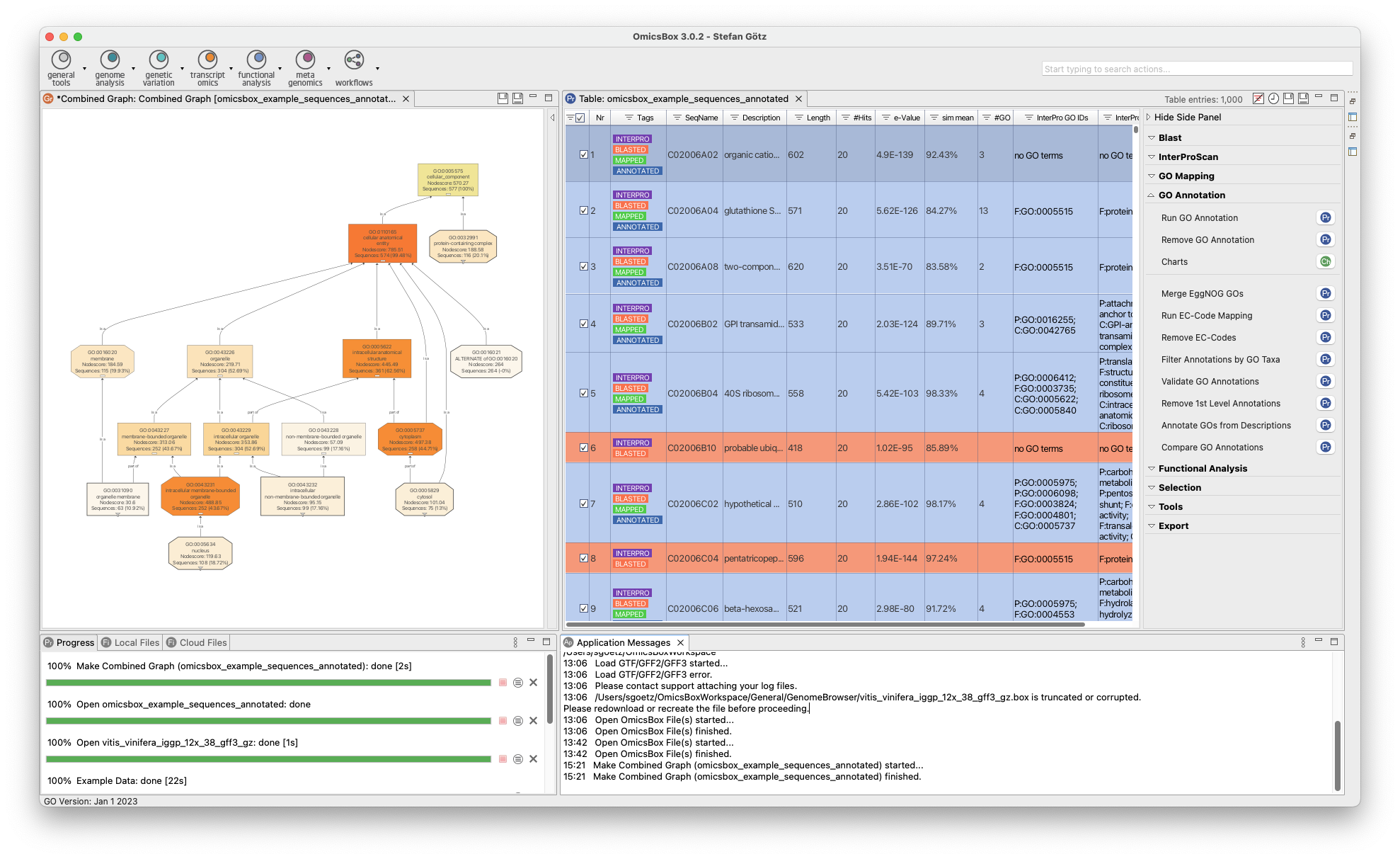
Figure 1. The Blast2GO functional annotation results.
The three steps
1. Blast Search
The first step finds sequences similar to each query in a reference database using Blast. OmicsBox offers several ways to run Blast (Diamond Blast, CloudBlast, CloudBlast Against Custom Database, NCBI Blast - Online, and NCBI Blast - Local). The full configuration and results are described on the Blast Search page.
For GO annotation to work, the query sequences must be searched against a protein database: use blastx for nucleotide sequences and blastp for protein sequences.
2. GO Mapping
Mapping retrieves the GO terms associated with the Blast hits and gathers them into a candidate pool for each query sequence. The mapping sources and options are described on the GO Mapping page.
3. GO Annotation
Annotation applies an annotation rule to the candidate pool, balancing specificity and reliability through an annotation score, and assigns the selected GO terms to the query sequences. The annotation rule, its parameters, and the evidence code weights are described on the GO Annotation page.
References
Götz S., García-Gómez J.M., Terol J., Williams T.D., Nagaraj S.H., Nueda M.J., Robles M., Talón M., Dopazo J. and Conesa A. (2008). High-throughput functional annotation and data mining with the Blast2GO suite. Nucleic Acids Research, 36(10), 3420-3435.