Transcriptome Benchmarking with TUSCO
Introduction
TUSCO (Transcriptome Universal Single-isoform COntrol) evaluates a reconstructed transcriptome against a curated set of endogenous control genes that are known to express a single isoform. Because each of these genes has exactly one true transcript, any additional, truncated, or novel model reported for it is a reconstruction error. This makes TUSCO genes a ground truth for measuring the sensitivity and precision of a long-read transcriptome without needing spike-in controls.
TUSCO Benchmark works directly on the results of Curation of Long-Read Transcriptomes with SQANTI3. Every transcript that SQANTI3 assigned to a TUSCO gene is compared with that gene's reference transcript and sorted into one of three categories; TUSCO genes with no assigned transcript at all are counted separately as missed.
Please cite TUSCO as:
Liu, T., Paniagua, A., Jetzinger, F., Ferrández-Peral, L., Frankish, A., & Conesa, A. (2026). TUSCO: benchmarking transcriptome reconstruction with endogenous single-isoform controls. Nature Communications, 17, 5654.
The bundled species gene sets are distributed by the TUSCO project website.
Run TUSCO Benchmark on SQANTI3 results
TUSCO Benchmark is launched from the Side Panel of a SQANTI3 result:
Configuration
- Species: the species used to select the bundled TUSCO gene set. Currently Human and Mouse are supported.
- Reference Gene Set: the TUSCO control genes to benchmark against. The list is updated when the species above changes. The Universal (Core) set contains genes that are single-isoform across all tissues of the species. Dozens of tissue-specific sets follow it alphabetically. Tissue-specific sets are larger than the universal set but are only valid for that tissue.
- Use Custom TUSCO Reference: enables a user-supplied TUSCO reference file. When enabled, the Species and Reference Gene Set options above are disabled.
- Custom TUSCO Reference: a TSV file (
.tsv,.txt,.tsv.gz, or.txt.gz) containing gene identifiers for the custom control genes. One gene per line. If multiple identifier types are provided (e.g. Ensembl ID, RefSeq ID,etc.), write them in the same line separated by a tab. Only enabled when Use Custom TUSCO Reference is checked.
- Custom TUSCO Reference: a TSV file (
- TSS/TTS Distance Tolerance (bp): the maximum distance to the reference transcription start site (TSS) and transcription termination site (TTS) for a full-splice match to still count as a true positive. Defaults to 50 bp and applies to both ends of the transcript.
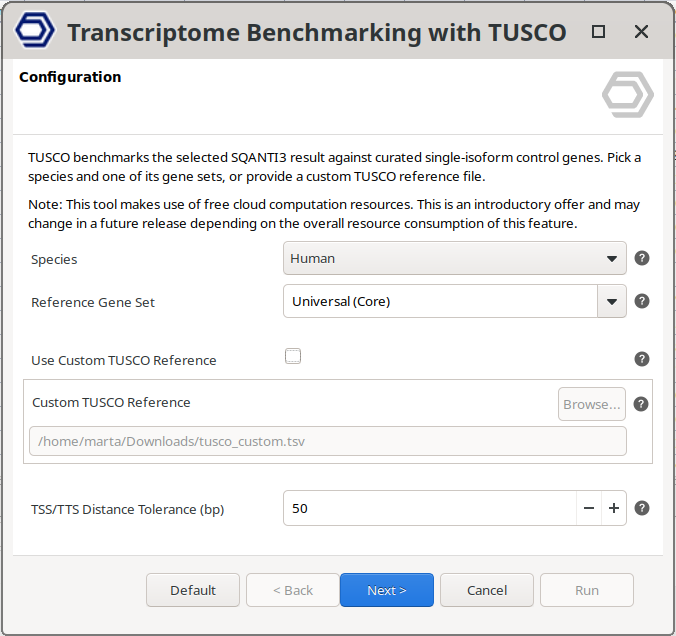
Figure 1. Configuration page of the TUSCO Benchmark wizard.
CloudSync Data Handling
TUSCO Benchmark runs via Cloud Sync (see Cloud Sync). The last wizard page is the general CloudSync Data Handling page, where it is possible to configure where the input files are read from and where the output files are saved:
- Save local inputs in cloud: keeps the input files uploaded to the cloud after the job finishes.
- Save results in cloud: saves the TUSCO results and report to the user's Cloud Files space.
- Cloud Folder: the cloud folder used for the options above.
- Email notification: sends an email when the job finishes.
Results
When the job finishes, TUSCO Benchmark automatically opens two outputs: a results table and a summary report.
TUSCO results table
The results table lists every transcript that SQANTI3 assigned to a TUSCO gene, with one row per transcript (Figure 2):
- TUSCO Category: the benchmark outcome for this transcript.
- True Positive (TP): a full-splice match whose 5' and 3' ends both lie within the TSS/TTS distance tolerance of the reference transcript, so the isoform was reconstructed correctly.
- Partial True Positive (PTP): a full- or incomplete-splice match on a TUSCO gene that has no true positive, so the gene was found and its splice junctions are known, but no model reproduces its ends.
- False Positive (FP): a novel in catalog, novel not in catalog, genic, or fusion transcript on a TUSCO gene, a model the gene is not expected to produce.
- Transcript ID: ID of the isoform, as assigned by SQANTI3.
- Associated Gene: the TUSCO gene the transcript was matched to.
- Structural Category: SQANTI3 structural category of the transcript (see the SQANTI3 classification table).
- Subcategory: SQANTI3 subcategory of the transcript.
TUSCO genes with no assigned transcript at all are False Negatives (FN): the gene was missed entirely. Since there is no transcript to show, false negatives do not appear as rows in the main results, but they are listed in the Summary Report instead.
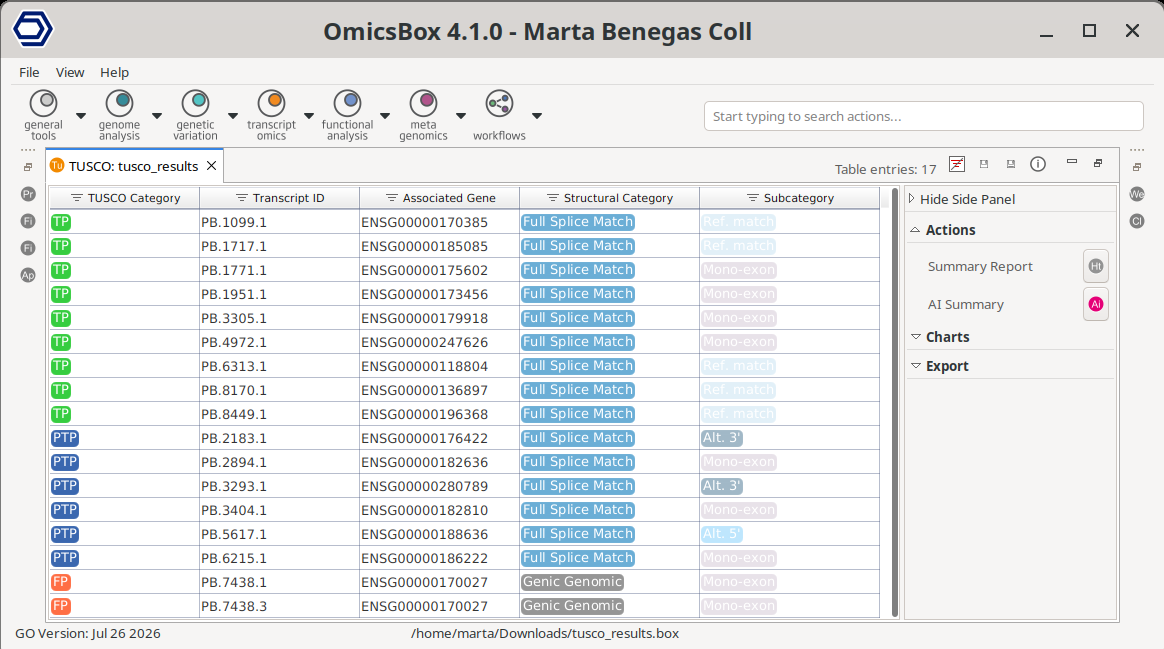
Figure 2. TUSCO results table in OmicsBox.
Summary Report
The side panel of the TUSCO results also provides a Summary Report action, under Actions, which opens a report with the following sections (Figure 3):
- Reference Gene Set: the species, tissue, and reference file used (or a note that a custom reference was used), the total number of TUSCO genes, the identifier type matched (Ensembl gene ID, RefSeq ID, or gene name), and a link to the full list of reference genes.
- Classification Results: the count of transcripts or genes in each of the four categories (True Positive, Partial True Positive, False Positive, and False Negative), each linking to its own gene ID list, together with the definition of each category.
- Statistics: the benchmark metrics, namely Sensitivity, Non-redundant Precision, Redundant Precision, Positive Detection Rate, False Discovery Rate, False Detection Rate, and Redundancy.
- Warnings: shown only when the service reports issues with the run.
- Analysis Parameters: the SQANTI3 result, species, reference gene set, and TSS/TTS distance tolerance used for the run.
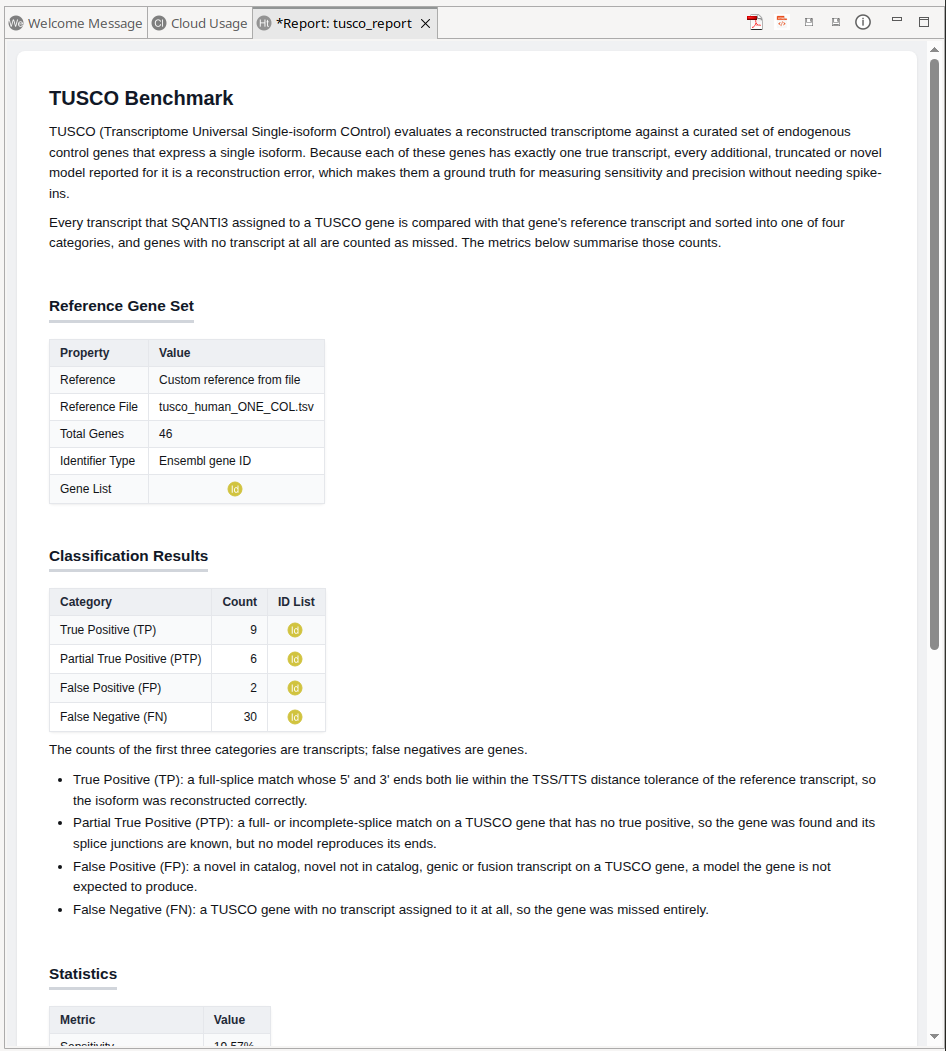
Figure 3. TUSCO Benchmark summary report.
Classification Results chart
The Charts group of the side panel provides a Classification Results chart, a bar chart of the number of transcripts and genes in each of the four TUSCO categories (Figure 4). It can be switched to a horizontal bar or pie chart from the plot editor in the chart's own side panel.
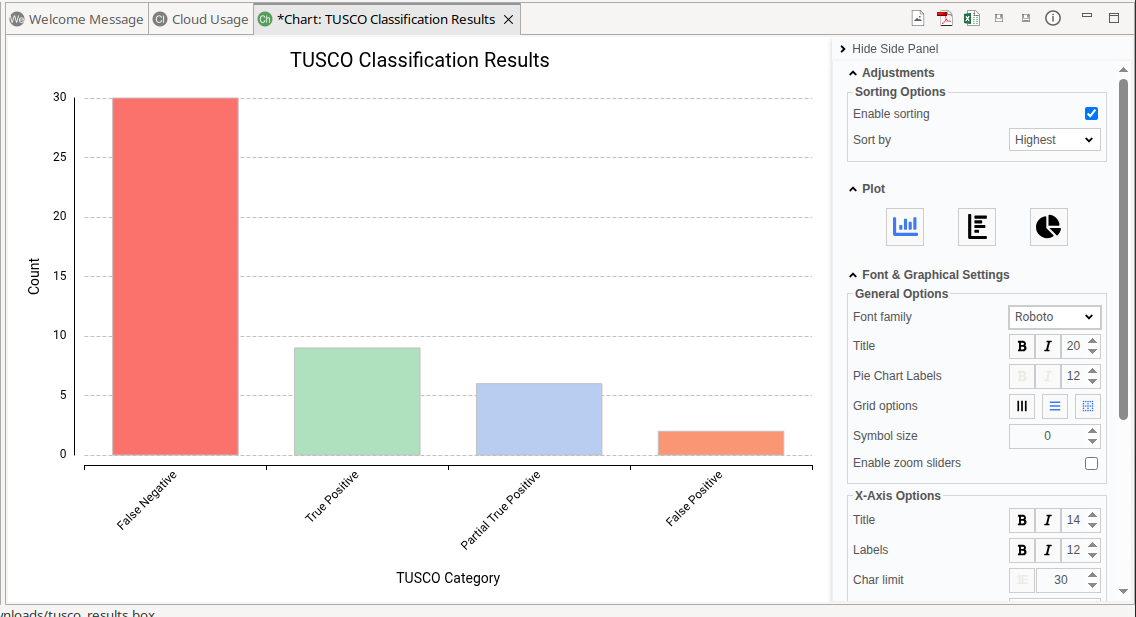
Figure 4. Classification Results chart.
AI Summary
The AI Summary action in the side panel generates an AI-powered summary of the TUSCO benchmark results, covering the dataset and parameters used, the benchmark metrics, a structural breakdown of the classified transcripts, and the reference gene lists. This feature requires an active internet connection and uses complimentary cloud units.